
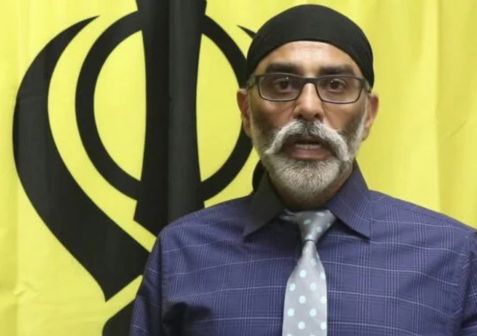
The Ongoing Saga of Gurpatwant Singh Pannun: Foiled Assassination Plots, Diplomatic Tensions, and the Khalistan Movement
By International Correspondent
December 17, 2025Gurpatwant Singh Pannun, a dual U.S.-Canadian citizen and prominent Sikh separatist leader, remains a polarizing figure in international security and diplomacy. Far from being reported missing, Pannun is actively engaged in advocacy for the Khalistan movement through his organization, Sikhs for Justice (SFJ).
However, his high-profile activities have made him the alleged target of assassination plots linked to Indian government elements, according to U.S. authorities. These allegations have sparked significant diplomatic friction between the United States and India, while New Delhi views Pannun as a designated terrorist involved in anti-national activities.Pannun, born in the 1970s in Punjab, India, moved to the United States in the early 1990s, where he acquired citizenship and established himself as a lawyer.
He serves as the general counsel for SFJ, a U.S.-based group founded in 2007 that campaigns for a separate Sikh homeland—Khalistan—carved out of India’s Punjab region. The Khalistan movement traces its roots to the turbulent 1980s, when a violent insurgency in Punjab led to thousands of deaths, culminating in the Indian Army’s Operation Blue Star in 1984 and the subsequent assassination of Prime Minister Indira Gandhi.
Though the movement has minimal support within India today, it persists among segments of the Sikh diaspora in countries like the U.S., Canada, and the UK.SFJ’s primary tool has been organizing non-binding “Khalistan referendums” worldwide, symbolic votes aimed at gauging support for Sikh self-determination.
These events, often drawing thousands of participants, have included rallies and voting drives in cities like San Francisco and Vancouver. India has banned SFJ as an unlawful association under the Unlawful Activities (Prevention) Act, citing its involvement in subversive activities. In 2020, Pannun was individually designated a terrorist by India’s Ministry of Home Affairs, with his properties in Punjab seized in subsequent years.
The Ongoing Saga of Gurpatwant Singh Pannun
Pannun rejects these labels, insisting his work is peaceful advocacy protected by free speech rights in the West.Pannun’s provocative style has fueled controversy. He has released numerous videos criticizing the Indian government, offering rewards for anti-India actions like hoisting Khalistan flags on public buildings, and issuing warnings to Indian officials and diaspora members.
In 2023, he sparked outrage by urging Indo-Canadian Hindus to leave Canada and threatening disruptions related to Air India flights. These statements led to investigations in Canada and further solidified India’s view of him as a threat to national security.The most explosive developments, however, center on allegations of assassination attempts against Pannun.
In November 2023, U.S. federal prosecutors unsealed an indictment charging Indian national Nikhil Gupta with murder-for-hire in a plot to kill Pannun on American soil. According to court documents, Gupta, arrested in the Czech Republic in June 2023 and extradited to the U.S. in 2024, was allegedly directed by an unnamed Indian government employee—referred to as “CC-1″—who worked in intelligence and security.
The plot reportedly began in May 2023, with Gupta recruited to orchestrate the killing for $100,000, including an advance payment of $15,000 in cash handed to what he believed was a hitman but was actually an undercover U.S. agent. Prosecutors linked the scheme to broader targets, noting that shortly after the June 2023 killing of Canadian Sikh separatist Hardeep Singh Nijjar, the Indian official allegedly sent Gupta a video of Nijjar’s body, urging haste in targeting Pannun.
The foiled plot drew parallels to Nijjar’s assassination in Surrey, British Columbia, which Canadian Prime Minister Justin Trudeau publicly linked to Indian agents in September 2023—a claim India vehemently denies. The U.S. case intensified scrutiny, with the Biden administration raising concerns directly with New Delhi at high levels.In October 2024, U.S. authorities escalated by unsealing a superseding indictment naming “CC-1” as Vikash Yadav (also spelled Vikas Yadav), a former Indian intelligence officer no longer in government service.
Yadav was charged with murder-for-hire, conspiracy, and money laundering. The FBI placed him on its most-wanted list and issued a wanted poster.Prosecutors allege Yadav masterminded the operation from India, recruiting Gupta (who faced pending criminal cases in India that were allegedly resolved as incentive) and coordinating surveillance. The plot was timed to avoid overlapping with Prime Minister Narendra Modi’s June 2023 state visit to the U.S. Gupta pleaded not guilty in a New York court and remains in detention.
India’s response has been measured but firm. Officials described extraterritorial killings as “contrary to government policy” and a “matter of concern.” In November 2023, New Delhi formed a high-level inquiry committee to examine U.S.-provided inputs. The committee visited Washington for discussions, and in January 2025, India’s Ministry of Home Affairs announced it recommended legal action against an individual with “criminal links and antecedents”—widely understood to refer to Yadav—along with procedural reforms to enhance response capabilities.
Despite the allegations, India-U.S. ties have remained robust, with cooperation in defense, technology, and counterterrorism continuing apace.U.S. officials have expressed satisfaction with India’s investigative efforts, contrasting with strained relations with Canada. Pannun, for his part, has called the plot “transnational terrorism” by India, challenging U.S. sovereignty and free speech. He continues SFJ activities, including referendums, and has filed civil lawsuits seeking damages.As of late 2025, Pannun remains active and vocal, issuing statements and threats against Indian interests.
Recent reports mention his presence at events and ongoing security concerns. The case underscores broader tensions: India’s frustration with Western countries harboring separatists under free speech protections, versus concerns over alleged state-sponsored extraterritorial actions.Experts note the Khalistan movement’s limited traction in India but persistent diaspora support.
The Pannun saga highlights evolving India-West relations amid shared strategic interests against China, balanced against rule-of-law commitments.With legal proceedings ongoing—Gupta’s trial pending and Yadav at large—the story of Gurpatwant Singh Pannun illustrates the complex interplay of diaspora politics, national security, and international diplomacy. As investigations continue on both sides, the world watches for resolutions that uphold sovereignty without escalating conflicts.

Rakesh Pandey is a seasoned media professional and editor with over 20 years of rich experience spanning print, digital, and electronic (television) media in India and abroad.