
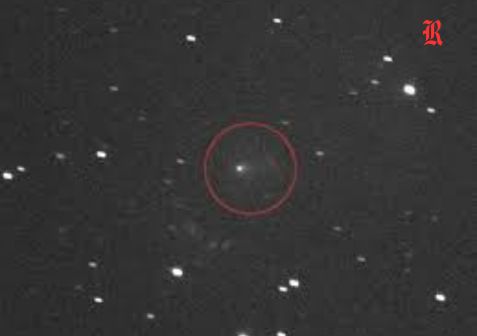
Interstellar Comet 3I/ATLAS: NASA’s Historic Third Visitor from Another Star System Makes Closest Earth Approach
In a rare cosmic event that’s captivating astronomers and stargazers worldwide, the interstellar comet 3I/ATLAS is set to make its closest approach to Earth tomorrow, December 19, 2025. Discovered just months ago by NASA’s funded Asteroid Terrestrial-impact Last Alert System (ATLAS), this extraterrestrial wanderer—originating from beyond our solar system—is only the third confirmed interstellar object ever detected.
As NASA mobilizes an unprecedented fleet of spacecraft and telescopes to study it, 3I/ATLAS offers a unique window into the building blocks of distant planetary systems.
What Is Interstellar Comet 3I/ATLAS?
Comet 3I/ATLAS, officially designated C/2025 N1 (ATLAS), earned its “3I” prefix as the third interstellar (“I”) object identified passing through our solar system.
The first was the cigar-shaped 1I/’Oumuamua in 2017, an inactive asteroid-like body that sparked global intrigue. The second, 2I/Borisov in 2019, was the first confirmed interstellar comet, showing classic cometary activity with a tail and coma.
Unlike typical solar system comets that orbit the Sun in elliptical paths, 3I/ATLAS follows a hyperbolic trajectory, meaning it’s moving too fast—up to 137,000 miles per hour (221,000 km/h) upon entry—to be gravitationally bound to our star.
This unbound path confirms its origins in another star system, likely ejected billions of years ago during planetary formation chaos.
Discovered on July 1, 2025, by the ATLAS telescope in Río Hurtado, Chile, the comet was initially spotted as a faint moving object. Follow-up observations quickly revealed its interstellar nature due to its extreme velocity (hyperbolic excess velocity of 58 km/s, faster than both previous visitors) and trajectory from the direction of the constellation Sagittarius.
NASA and global astronomers confirmed cometary activity by July 2, with telescopes detecting a marginal coma—a fuzzy envelope of gas and dust—and a reddish tail-like elongation.
Interstellar Comet 3I/ATLAS Astronomers expect more discoveries
This activity stems from the comet’s icy nucleus sublimating (turning directly from ice to gas) as it warms near the Sun.The Comet’s Journey Through Our Solar System3I/ATLAS entered our solar system from interstellar space, speeding toward its perihelion (closest solar approach) on October 30, 2025, at about 1.4 astronomical units (AU)—just inside Mars’ orbit.
During this pass, it brightened significantly, developing a prominent coma and tail driven by volatiles like carbon dioxide (CO₂), carbon monoxide (CO), and water ice.Notably, the comet showed unusual chemistry: high CO₂ abundance relative to water, suggesting it formed in a colder, more distant region of its original system than typical solar system comets. Observations also detected nickel emissions and a reddish dust coma, similar to 2I/Borisov.
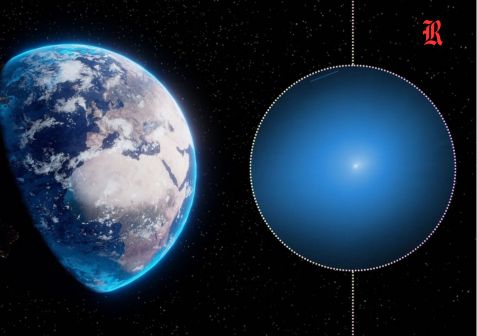
Now outbound, 3I/ATLAS will reach its closest Earth approach on December 19 at approximately 1.8 AU (167-170 million miles or 270 million km)—safely distant, posing no threat.
It will appear in the predawn sky in the constellation Leo, potentially visible with binoculars or small telescopes for experienced observers in dark skies.After Earth, the comet will swing closer to Jupiter in March 2026 (within 33 million miles), then cross the orbits of Uranus (2027), Neptune (2028), and Pluto (2029) before exiting the solar system in the mid-2030s, never to return.
NASA’s Unprecedented Observation Campaign
What sets 3I/ATLAS apart is the scale of NASA’s response. For the first time, the agency coordinated a solar system-wide campaign involving over 20 missions to track this visitor.Key highlights include:
- Hubble Space Telescope: Captured detailed images in July, August, and November 2025, estimating the nucleus size between 1,400 feet (440 meters) and 3.5 miles (5.6 km). Recent November 30 images showed the comet at 178 million miles from Earth, with streaked background stars due to tracking its motion.
- Mars Missions: In early October, Mars Reconnaissance Orbiter (MRO) snapped close-up views from 19 million miles, while MAVEN detected ultraviolet hydrogen emissions and Perseverance rover glimpsed it faintly.
- Deep Space Craft: Psyche (September) and Lucy (September 16) imaged the coma and tail from millions of miles away. STEREO and SOHO also stacked images to reveal the faint object.
- Other Assets: SPHEREx, JWST (August), and even heliophysics missions observed it, marking the first purposeful interstellar study by such tools.
This multi-lens approach has refined the comet’s trajectory tenfold and revealed non-gravitational acceleration—likely from outgassing “jets” rather than alien tech, as some speculated.NASA’s Paul Chodas, director of the Center for Near-Earth Object Studies, called it a “grand tour” opportunity, with data expected to yield insights for years.Scientific Significance of 3I/ATLASInterstellar objects like 3I/ATLAS are time capsules from alien solar systems. Its composition—rich in CO₂ and showing delayed water sublimation—hints at formation in a system with different temperature gradients than ours. Estimates suggest it could be 7-14 billion years old if from the Milky Way’s thick disk (older stars with fewer heavy elements).Compared to predecessors:
- ‘Oumuamua: Inactive, rocky, no coma.
- Borisov: Active but fragmented.
- 3I/ATLAS: Highly active, stable, fastest known.
Astronomers expect more discoveries with upcoming surveys like Vera C. Rubin Observatory, potentially revealing a population of such visitors.
How to See Interstellar Comet 3I/ATLAS
While not naked-eye bright, 3I/ATLAS is observable with amateur equipment. On December 19, look predawn in Leo. Use apps like Stellarium for locating. Best views: dark sites, binoculars (8×50 or larger), or telescopes. It may appear as a fuzzy patch.
Livestreams and virtual telescope projects offer online views.
A Cosmic Messenger from the StarsAs 3I/ATLAS bids farewell, it reminds us of our solar system’s place in the vast Milky Way. NASA’s efforts underscore the excitement of planetary science: studying these rare visitors could unlock secrets of exoplanet formation and galactic chemistry.
Stay tuned for post-approach updates—scientists anticipate more revelations as data pours in.
Sources: NASA Science, ESA, Wikipedia, Space.com, and astronomical journals.

Rakesh Pandey is a seasoned media professional and editor with over 20 years of rich experience spanning print, digital, and electronic (television) media in India and abroad.