
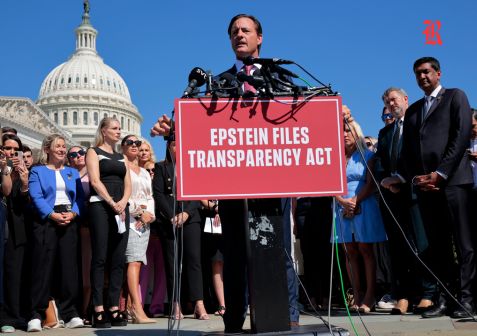
Epstein Files 2025: Major Unsealing of Grand Jury Records and Investigative Documents Set for December 19 Deadline
December 18, 2025
The long-awaited release of thousands of pages from the Jeffrey Epstein investigations is imminent, as a federal deadline approaches tomorrow. Under the newly enacted Epstein Files Transparency Act, the U.S. Department of Justice (DOJ) must disclose a vast trove of unclassified records related to the late financier and convicted sex offender Jeffrey Epstein and his associate Ghislaine Maxwell.
This development follows a series of court rulings in early December 2025 that paved the way for unsealing grand jury materials, marking a significant step toward greater transparency in one of the most infamous sex trafficking cases in modern history.
Jeffrey Epstein, who died by suicide in 2019 while awaiting trial on federal sex trafficking charges, has remained a figure of intense public scrutiny due to his connections to powerful individuals across politics, business, and entertainment.
The upcoming release could shed new light on the federal probes into his alleged underworld network, though experts caution that much of the material may not reveal groundbreaking new allegations.
The Epstein Files Transparency Act: A Bipartisan Push for Disclosure
The catalyst for this latest wave of unsealing is the Epstein Files Transparency Act, signed into law by President Donald Trump in November 2025.
The legislation passed Congress with overwhelming bipartisan support—427-1 in the House and unanimously in the Senate—requiring the DOJ to release “all unclassified records, documents, communications, and investigative materials” related to Epstein and Maxwell within 30 days.
The act explicitly overrides traditional barriers to disclosure, including grand jury secrecy rules, while mandating redactions to protect victims’ identities and sensitive information. It prohibits withholding documents based on “embarrassment, reputational harm, or political sensitivity.
” Attorney General Pam Bondi has been overseeing the process, with the deadline falling on December 19, 2025.This law builds on years of pressure from victims’ advocates, journalists, and lawmakers who argued that secrecy surrounding Epstein’s cases allowed potential enablers to evade accountability.
Earlier partial releases, including from Epstein’s estate and civil lawsuits, had fueled speculation, but the 2025 act aims for comprehensive federal transparency.Recent Court Rulings Unlock Grand Jury SecretsIn the weeks leading up to the deadline, federal judges in New York and Florida issued rulings approving the unsealing of grand jury materials from multiple Epstein-related investigations.
On December 5, 2025, U.S. District Judge Rodney Smith in Florida ordered the release of transcripts from the 2006-2007 federal grand jury probe into Epstein’s activities in Palm Beach. This marked the first successful unsealing under the new law.
On December 9, Judge Paul A. Engelmayer in New York authorized the disclosure of materials from Ghislaine Maxwell’s 2021 sex trafficking prosecution.
On December 10, Judge Richard M. Berman in Manhattan granted the DOJ’s request to unseal records from Epstein’s 2019 federal case, reversing earlier denials based on secrecy concerns.
These rulings cover not only transcripts but also discovery materials, search warrants, financial records, survivor interviews, and forensic data from seized devices. Judges emphasized victim protections, noting that explicit materials depicting abuse would remain sealed or heavily redacted.Legal experts note that grand jury testimony is often limited—primarily featuring investigators rather than high-profile witnesses—and may not introduce dramatic new revelations.
As Judge Engelmayer previously observed, much of the material focuses on Epstein and Maxwell without naming additional alleged perpetrators.
What to Expect in the Epstein Files 2025
The DOJ has described the upcoming release as “voluminous,” potentially encompassing hundreds of thousands of pages. Categories include:Investigative files from Epstein’s 2008 Florida plea deal, 2019 federal indictment, and Maxwell’s prosecution.
Flight logs from Epstein’s private jets, often dubbed the “Lolita Express.”
Financial transactions and bank records.
Materials from related civil suits, including depositions.
Documents tied to Epstein’s 2019 death in custody.
Earlier in 2025, partial releases occurred: In February, Bondi declassified files detailing Epstein’s exploitation of over 250 underage victims. The House Oversight Committee also disclosed tens of thousands of pages from the Epstein estate, including photos of high-profile figures.
However, persistent rumors of a definitive “Epstein client list” have been debunked by officials and fact-checkers. The DOJ has stated no such singular list exists, and mentions of associates in documents do not imply wrongdoing.
Names like former Presidents Bill Clinton and Donald Trump, Prince Andrew, Bill Gates, and others have appeared in prior releases (e.g., flight logs or depositions), often without evidence of criminal involvement.
Background: Epstein’s Crimes and Controversial Plea Deal
Epstein’s criminal history dates back to the mid-2000s when Palm Beach police uncovered evidence of him abusing dozens of underage girls at his mansion. In 2008, he secured a controversial non-prosecution agreement, pleading guilty to state charges and serving just 13 months with work release.
Federal prosecutors later charged him in 2019 with running a sex trafficking ring involving minors recruited as “masseuses.”Ghislaine Maxwell, Epstein’s longtime companion, was convicted in 2021 of procuring girls for him and sentenced to 20 years. She continues to appeal, recently seeking to vacate her sentence amid the new disclosures.
Victims like Virginia Giuffre have alleged a broader network, leading to civil settlements and unsealed documents from her 2015 defamation suit against Maxwell (released primarily in 2024). Those files named over 150 associates but contained no proven “black book” of clients.Epstein’s 2019 suicide in a Manhattan jail sparked conspiracy theories and official reviews, with no evidence of foul play found.
Public Reaction and Political Context
The impending release has reignited debates. Victims’ advocates hail it as justice delayed but welcome. Critics, including some on the political right and left, speculate about withheld information, though the law includes narrow exemptions for ongoing probes.
House Democrats released additional estate photos in December 2025 showing figures like Trump, Clinton, and Steve Bannon in social settings with Epstein—images that do not imply illegality but fuel media coverage.
As the December 19 deadline looms, the nation awaits whether these Epstein files will finally close chapters on lingering questions or spark new controversies.
Transparency advocates argue that full disclosure, with protections for survivors, is essential for accountability.
Stay tuned for updates as the documents are released.
This story will be updated with key revelations.

Rakesh Pandey is a seasoned media professional and editor with over 20 years of rich experience spanning print, digital, and electronic (television) media in India and abroad.